
Introduction
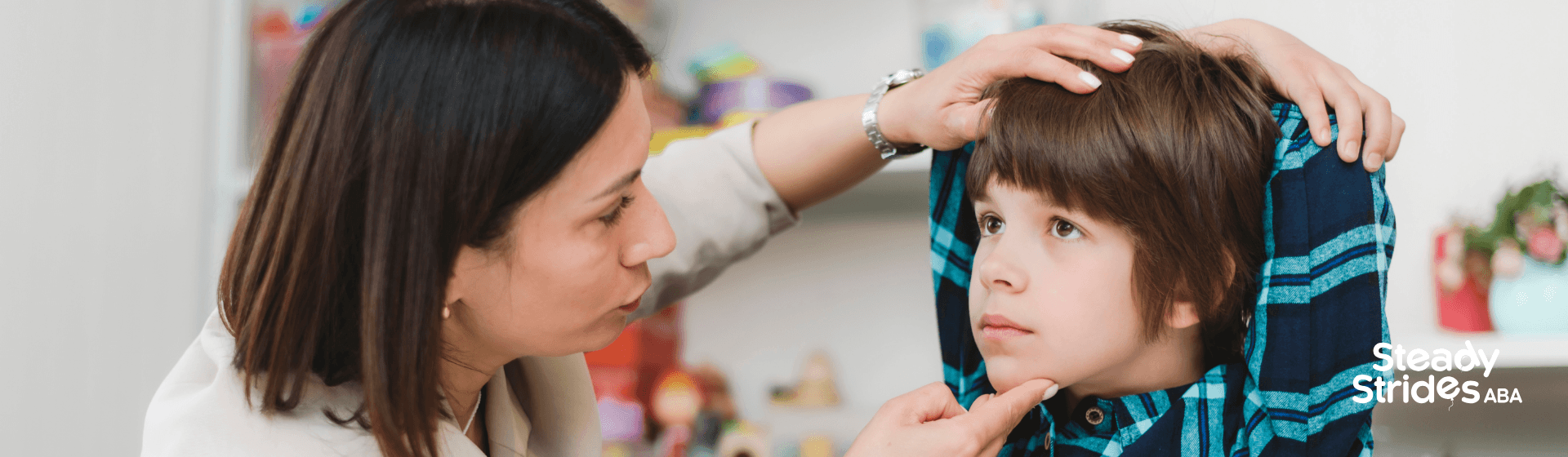
Nonverbal autism refers to autistic individuals who do not use spoken words to communicate, or who have very limited verbal speech. Roughly 25–30% of children on the autism spectrum are considered minimally verbal or nonverbal, meaning they may use only a few words, repeat scripted phrases, or rely on no spoken language at all to express their needs.
Nonverbal Autism Definition: Description, Not Diagnosis
It's important to know that "nonverbal autism" is not an official
diagnosis listed in the DSM-5. Instead, it's a descriptive term used by parents, clinicians, and educators to talk about a child's current communication profile. A nonverbal autistic child still has thoughts, preferences, and feelings. They simply express them through channels other than speech. Many also understand far more language than they can produce, which is why assuming competence matters so much in therapy and
at home.
Nonverbal Autism Communication Alternatives
Communication doesn't require speech. Most nonverbal autistic children thrive when given access to one or more of these tools:
- Augmentative and Alternative Communication (AAC): Speech-generating tablet apps and devices that let a child tap pictures or type words to "speak" out loud.
- Picture Exchange Communication System (PECS): A structured method where children hand over picture cards to request items, comment, or answer questions.
- Sign language and gestures: Simple signs and natural gestures that give children an immediate way to express needs while spoken language develops.
In our Houston and Richmond sessions, we've seen children who started with just two PECS cards expand to full sentence strips on an AAC device within a year of consistent ABA therapy paired with parent training.
Can a Nonverbal Autistic Child Learn to Speak?
Yes, many can, and others develop powerful communication without spoken words. Research shows that with early intervention, a meaningful percentage of nonverbal autistic children gain phrases or fluent speech, even after age four. Even when speech doesn't fully emerge, nonverbal autism can absolutely improve through AAC, signs, and behavioral supports that build real, functional communication.
Conclusion
Understanding what nonverbal autism means is the first step toward supporting your child. It's not a final verdict on their ability to connect. It's a starting point for finding the right tools, therapy approach, and team. With early intervention, individualized goals, and family involvement, nonverbal autistic children across Texas are building meaningful communication every single day.
Your child has more to say than words alone can capture, and the right support can help them say it. Steady Strides ABA supports Texas families with ABA therapy rooted in school-based support and individualized goals, helping nonverbal children find their voice in ways that work best for them.
Looking for ABA Support in Texas? Contact us today!
Frequently Asked Questions
What is the difference between nonverbal and nonspeaking autism?
"Nonspeaking" is a newer, often-preferred term because it acknowledges that the person communicates, just not through speech. "Nonverbal" can wrongly imply no language understanding at all, which is rarely accurate for autistic children.
At what age should I worry if my child isn't talking?
If your child has fewer than 15 words by 18 months, isn't combining two words by age 2, or has lost language they previously used, talk to your pediatrician about an autism evaluation right away. Early assessment leads to earlier support.
Does ABA therapy help nonverbal autistic children?
Yes. ABA therapy targets functional communication, vocal imitation, and AAC use through individualized, evidence-based goals. Combined with speech-language therapy, it's one of the most effective ways to help nonverbal children communicate clearly and confidently.
SOURCES:
https://www.asha.org/public/speech/disorders/aac/?srsltid=AfmBOorPuwp6k6TNREK_FF_GeaM4bPAkgz8TO0VFPsXAGhlpmjDsP2Y0
https://pubmed.ncbi.nlm.nih.gov/40164146/
https://www.rcslt.org/speech-and-language-therapy/clinical-information/augmentative-and-alternative-communication/
https://en.wikipedia.org/wiki/Augmentative_and_alternative_communication
https://www.ebsco.com/research-starters/communication-and-mass-media/augmentative-and-alternative-communication