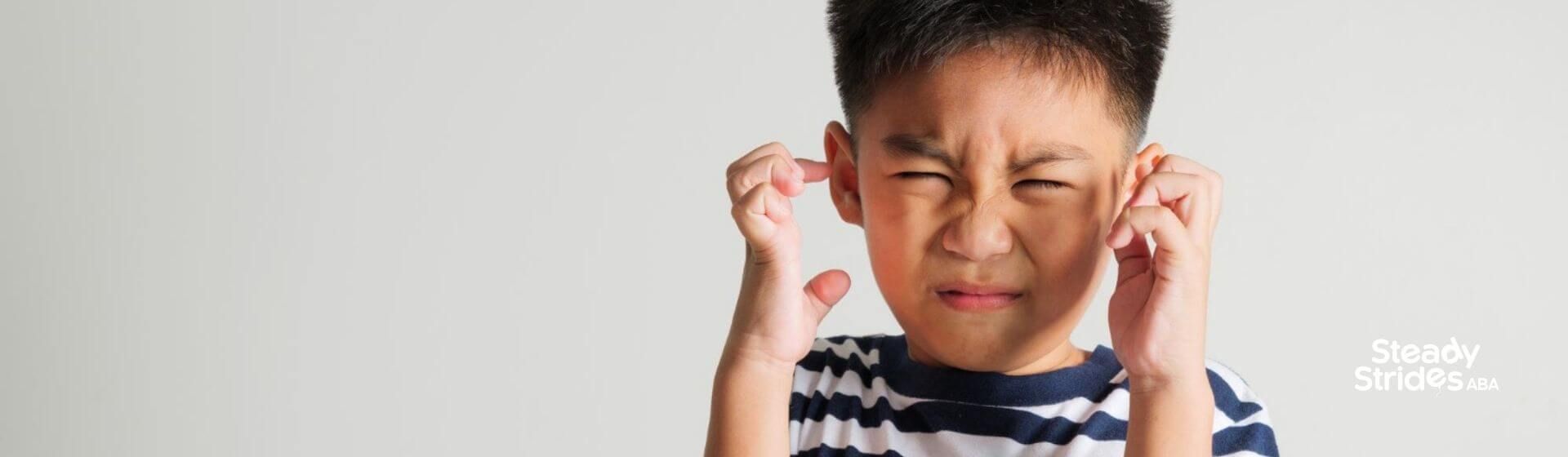


If you’ve ever watched a child with autism flap their hands, rock back and forth, or line up toys, you’ve seen self-stimulatory behaviors — often called stimming. These repetitive actions can look unusual, but they serve a purpose: comfort, regulation, and communication.
In ABA therapy, we don’t focus on stopping these behaviors. Instead, we work to understand why they happen and gently guide children toward new, flexible ways to cope and express themselves.
Understanding Self-Stimulatory Behaviors
Self-stimulatory behaviors are repetitive actions — movements, sounds, or even rituals — that help a person stay calm, focused, or stimulated.
For many children with autism, these behaviors can feel comforting, like a predictable rhythm in a world that sometimes feels unpredictable or overwhelming.
Some common examples include:
- Hand-flapping or rocking back and forth
- Spinning toys or other objects
- Repeating words or phrases (echolalia)
- Tapping, humming, or pacing
- Lining up toys or sorting objects by color or size
Each behavior serves a purpose. Sometimes, a child rocks to soothe themselves when anxious. Other times, they might repeat a phrase because it feels satisfying or helps them process language. The key is understanding function over form — what the behavior accomplishes for the child.
Why ABA Therapy Doesn’t Focus on “Stopping” Behavior
In ABA, we approach behavior as a form of communication. Every action, even one that looks unusual, tells us something about how a child feels or what they need.
That’s why the goal isn’t to eliminate stimming altogether, but to teach alternative ways to self-regulate and express needs — especially if the behavior becomes disruptive or harmful.
For instance, if a child spins in circles when feeling anxious, that’s a clue they’re trying to self-soothe. Instead of removing that coping tool, I might introduce something new — like deep breathing, squeezing a stress ball, or using a sensory bin.
The goal is not to take away comfort but to expand coping options that work across settings, like home and school.
How ABA Therapy Helps Manage Self-Stimulatory Behaviors
The ABA process is structured, compassionate, and highly individualized. Here’s how we typically approach it:
Observation and Assessment
We start by carefully observing when, where, and why the behavior occurs. Is it happening during noisy activities? During transitions? When the child is bored or anxious? Tracking these details helps uncover the pattern and triggers behind the behavior.
Functional Behavior Analysis (FBA)
Next, we conduct a Functional Behavior Analysis, or FBA. This step digs deeper into the purpose the behavior serves. Does it provide sensory stimulation?
Help the child escape a difficult task? Gain attention? Once we identify the “why,” we can design a plan that respects that need while promoting more adaptive behaviors.
Introducing Replacement Behaviors
After identifying the function, we work on teaching replacement behaviors — actions that serve the same purpose but are safer, more flexible, or more socially appropriate.
For example, a child who flaps their hands when excited might learn to clap, jump, or express excitement verbally. A child who rocks when overwhelmed might be guided to use a weighted blanket or take short sensory breaks.
Using Positive Reinforcement
Positive reinforcement is at the heart of ABA. Every time a child uses a new, healthy coping skill, we reward it — through praise, tokens, or access to a favorite activity. This helps build strong, lasting behavior changes rooted in encouragement, not correction.
Involving Parents and Caregivers
Consistency is everything. That’s why I always involve families through ABA parent training. When parents understand the purpose behind behaviors and how to reinforce positive skills at home, progress becomes more natural and sustainable. It also helps reduce stress for parents who may feel unsure about how to respond to repetitive behaviors.
Putting It Into Practice
I once worked with a young child who loved to line up cars and blocks. It was his way of bringing order to a world that sometimes felt chaotic. While it didn’t harm anyone, it became so consuming that he avoided playing with peers or trying new games.
Instead of discouraging him, we gently expanded his play routines. We introduced turn-taking games using his favorite toys and encouraged him to build something together with a therapist. Over time, he learned to engage in flexible play while still finding comfort in patterns and order.
This balance — respecting his needs while helping him grow — is what ABA therapy aims for. We don’t take away what makes a child feel safe; we simply add more tools to their emotional toolbox.
Supporting Children with Empathy and Structure
Reducing self-stimulatory behaviors is not about changing who a child is — it’s about helping them navigate their world more comfortably. When we respond with empathy instead of frustration, we teach self-awareness, communication, and confidence.
At Steady Strides ABA, we take this compassionate, family-centered approach every day. Our programs in Texas and New Mexico include home-based ABA therapy, school-based ABA, and center-based therapy in Houston.
We also provide autism assessments and ABA parent training so families feel supported at every step.
If you’re a parent seeking help for repetitive or self-stimulatory behaviors, reach out to Steady Strides ABA. Together, we can create steady, meaningful progress — one compassionate step at a time.
FAQs
What are self-stimulatory behaviors in autism?
Self-stimulatory behaviors, or “stimming,” are repetitive movements or sounds like hand-flapping, rocking, or repeating words. They often help individuals regulate emotions or sensory input.
Can ABA therapy stop self-stimulatory behaviors completely?
The goal isn’t to stop these behaviors entirely but to teach alternative coping skills that serve the same purpose in a more flexible and functional way.
How can parents help reduce stimming at home?
Observe what triggers the behavior and provide calming alternatives like sensory toys, quiet spaces, or deep-pressure activities. ABA parent training can also help you learn practical techniques for daily support.
Sources:
- https://www.research.chop.edu/car-autism-roadmap/stimming-what-is-it-and-does-it-matter
- https://www.mayinstitute.org/news/acl/asd-and-dd-adult-focused/reducing-self-stimulatory-behaviors-in-individuals-with-autism/
- https://www.autism.org.uk/advice-and-guidance/topics/about-autism/repeated-movements-and-behaviour-stimming
- https://www.understood.org/en/articles/functional-behavioral-assessment-what-it-is-and-how-it-works
- https://www.psychiatry.org/news-room/apa-blogs/understand-stimming-repetitive-behaviors-purpose